A few months ago, I went through one of the hardest nervous system experiences of my life.
As I worked through the weeks that followed, I couldn’t stop thinking about the kids with autism I’ve worked with for over 20 years… and one question kept coming back to me.
Could big meltdowns actually leave a child’s nervous system stuck in a cycle that’s much harder to escape than we realize?
In this episode, I share my own experience, the emerging research that’s starting to explore this idea, and why I think looking beyond behavior may completely change how we support autistic kids with frequent meltdowns. If your child seems to get caught in the same cycle over and over again, I hope this conversation gives you a new way to think about what’s happening underneath the surface.
Resources Mentioned
Get a seat in the new Beyond Behavior—Thriving with Autism Workshop: on Aug 19 (replay provided)
Studies mentioned:
https://discovery.ucl.ac.uk/id/eprint/10209395/
https://pubmed.ncbi.nlm.nih.gov/41868251/


Key Timestamps
2:10 my first panic attach
7:15 The connection to autism?
12:00 A new way to think about meltdowns
18:00 What the research is saying
24:15 Where do we go from here?
Read the Transcript
Welcome to the Connected and Capable podcast. You’re here with Alisha Grogan, pediatric occupational therapist and mom, and I am so excited you are here for the third part of our autism series. Today, we’re gonna be diving into something that has been on my heart a lot lately. Are big meltdowns causing trauma for kids with autism, and what we know?
So I’m gonna be very honest and very clear upfront that this is in large part theory at this point, although I am far from the only one that is theorizing that the sometimes big and explosive meltdowns that kids with autism in particular are having, and certainly they are not the only kiddos that are having meltdowns, but
Certainly when children with autism have a lot of needs and need a lot of support, uh, what is sometimes referred to as profound autism, kids that often have very little, uh, communication, uh, they usually are not verbally speaking or if they do it’s in a limited capacity, uh, they’re not using a device, uh, very much, we can see very high rates of meltdowns and significant aggression.
Uh, as much as 60 to 70% of kids, uh, with autism, uh, go through or experience some levels of aggression and it is, um I think historically, certainly as I look back over the decades of my career as an OT, and from, again, the various… the, my very first job, even in my rotations in, in grad school, I was working with kids with profound autism, uh, with pretty much a r- just really the full spectrum of, of children with autism.
And so I, I saw a lot of how these types of challenges were being handled, and I’ve watched that evolve over the last few decades. And I will say there is a lot of good in what has happened in, in that area. However, when a child is having very big meltdowns, especially on a regular basis, it is extremely, uh, overwhelming to parents in particular, but also often for schools and staff that are supporting that child.
It is, uh, a complex topic. And so I know that we are only covering one small aspect of it today, but I think that this is really important, uh, and I… it has been on my heart because of an intense personal experience that I had a few months ago. And so I’m gonna, I’m gonna touch on that a little bit here today, and this kind of aha moment that I had because of my personal experience, uh, and the connection, uh, that I made to often kids with autism.
Um, I also have a very real-life personal example. I have a nephew with profound autism that struggles, uh, significantly with big meltdowns. And so I was thinking, I was thinking about him a lot. So let me, let me begin with just a quick recap here. Uh, and some of you, if you’re, uh, on my newsletter, you have heard me reference this a little bit.
But a few months ago, on a completely typical evening, uh, I went to, I went to sleep and woke up somewhere between 2 and 4 o’clock in the morning, having a hot flash, hello perimenopause, and then having a full panic attack, like immediately after I woke up at like the end of this hot flash. It felt like it wasn’t me.
It felt very hormonal. And even though I have struggled with anxiety and have worked on it so much in my life, uh, this didn’t feel like that. And so it f- it just, it truly felt chemical in my brain, but the experience was intense and lasted for two hours. Uh, my husband also happened to be out of town that night, and, uh, at the time, I certainly wasn’t thinking, “I wish he was here,” but my anxiety-prone brain, uh, and that pathway, uh, to my fight or flight response was activated in a pretty big way.
So while I was eventually able to go back to sleep, uh, and woke up the next night as I was kind of trying to sift through and manage what was to happen, as the next evening approached, uh, I had another really challenging night of just incredibly high anxiety, the highest of my life, and, uh, I’m sure was part me, part some of this hormonal change, kinda still happening inside of me.
Since then, uh, since, uh, then, and I, I’m filming this here, uh, at the end of July. I know it’s airing for you on August tenth. I have been on a major, uh, path of healing. It is– feels like it has been one of the most significant shifts in my life. Uh, but, but what I have thought about so much in this is how high my anxiety was, and I thought, I thought, I really thought if you had asked me in March before all of this happened if I knew high anxiety, I would have said yes, although I had never experienced a panic attack.
I would have said yes. The feeling was so unbearable for my system, and the subsequent kind of, uh, accidental isolation that I found myself in, and I was trying to figure out myself. My husband was out of town that week, and while I did call and, like, kind of check in on him and was trying to work through a game plan before this second night, uh, it wasn’t until the morning after that second night that I started to reach out for real help.
Here’s the thing. I had the ability to do that. I had the communication skills, I had the resources, and I was deeply blessed and fortunate, uh, to have many strategies and resources at my, at my disposal as I currently do. And it isn’t just one thing. There are a variety of ways that I am addressing this, and I will share more about this whole story and the perimenopausal aspect if you’re interested.
You can let me know. In a future episode, I promise. I know some of you have already asked for that. And the reason I’m even kind of just recapping that here is because what happened after this really significant event, uh, the mor- this, the morning after the second night, I felt completely shattered. I felt like I could barely cope or hang on.
I felt like my reality, as I had known it, uh, had ceased to exist. And so that may be… maybe that sounds dramatic, but that is truly what it felt like. And so, uh, what I have seen in kids with autism, and again, I, I talked about this a few weeks ago, uh, with one of our kiddos who’s just five years old, who’s clearly under- experiencing a lot of anxiety and ends up throwing something.
Uh, and even though he has very good verbal communication skills, was probably flooded at that moment and still, again, at five years old, probably not able to articulate real clearly what’s going on, doesn’t have a lot of tools or resources yet to use And I think so often, uh, and again, there are multiple triggers, and I’m not saying that it’s always anxiety, but I do think that anxiety can be a significant component of what is going on or an internal experience, whether that’s anxiety, whether that’s pain, whether that’s, gosh, sadness, depression in an autistic individual, and they aren’t sure how to express it.
Again, even if verbal language is appropriate, that might be a very abstract thing to try to put language to Are they able to, A, reach out for resources and help? Probably not. And B, the other component that was just a huge light bulb moment for me is that what has happened and what, what is still happening now is I am recovering from it.
My nervous system was absolutely pushed to the brink, and it is on guard, and it is hypervigilant. And so in this, in this, uh, hypervigilance, I am so much more susceptible. I’m wrestling with anxiety in a way that I never have. And while I, again, oh gosh, I’m so much… I am doing so much better than I was even two weeks ago or four weeks ago or six weeks ago, it is requiring a, a constant mindset and constant work on my part to heal because my brain is now– I can feel that it wants to freak, freak out way more.
How hard it was to trust falling asleep again, something I’m still working on because my brain is being so protective. And this is me as an adult, as somebody who understands neuroscience and the way the brain works and regulation and fight or flight. When a child has experienced a meltdown, which is intense feelings Is it possible that their brain is then more hypervigilant and the next meltdown is so much more likely to happen sooner and triggered easily?
So much so that it can become a cycle that feels impossible to break out of I think again, we have focused mostly on the behavior aspect of this and not the internal experience that a child or an adult is experiencing. Now, that doesn’t mean that it’s a pass because sometimes with those meltdowns are very dangerous behaviors for the child, for others But I can’t help but wonder if we started to recognize the emotional component, the internal experiences being so intense that a child feels like they’re crawling out of their skin, that we may have a different perspective on how to help and how to treat.
And so my hope, my hope in this episode is that this is helping us all to reframe and to consider this. Now, again, as I said, this is a theory. However, however, it is, it is not something I just pulled out of thin air. So as I started to think more about this connection, and I will say that I, I had some loose ideas around this before my personal experience.
But gosh, afterwards, it, it was something that I was thinking about quite a lot. I was thinking about my nephew and wondering if this is what he experiences and cannot express, and that he gets stuck in a loop that it just has got to feel terrible. Uh, and here’s the thing, it’s not a novel thought. So I’m gonna link some of this up in the show notes for you if you wanna dive deeper.
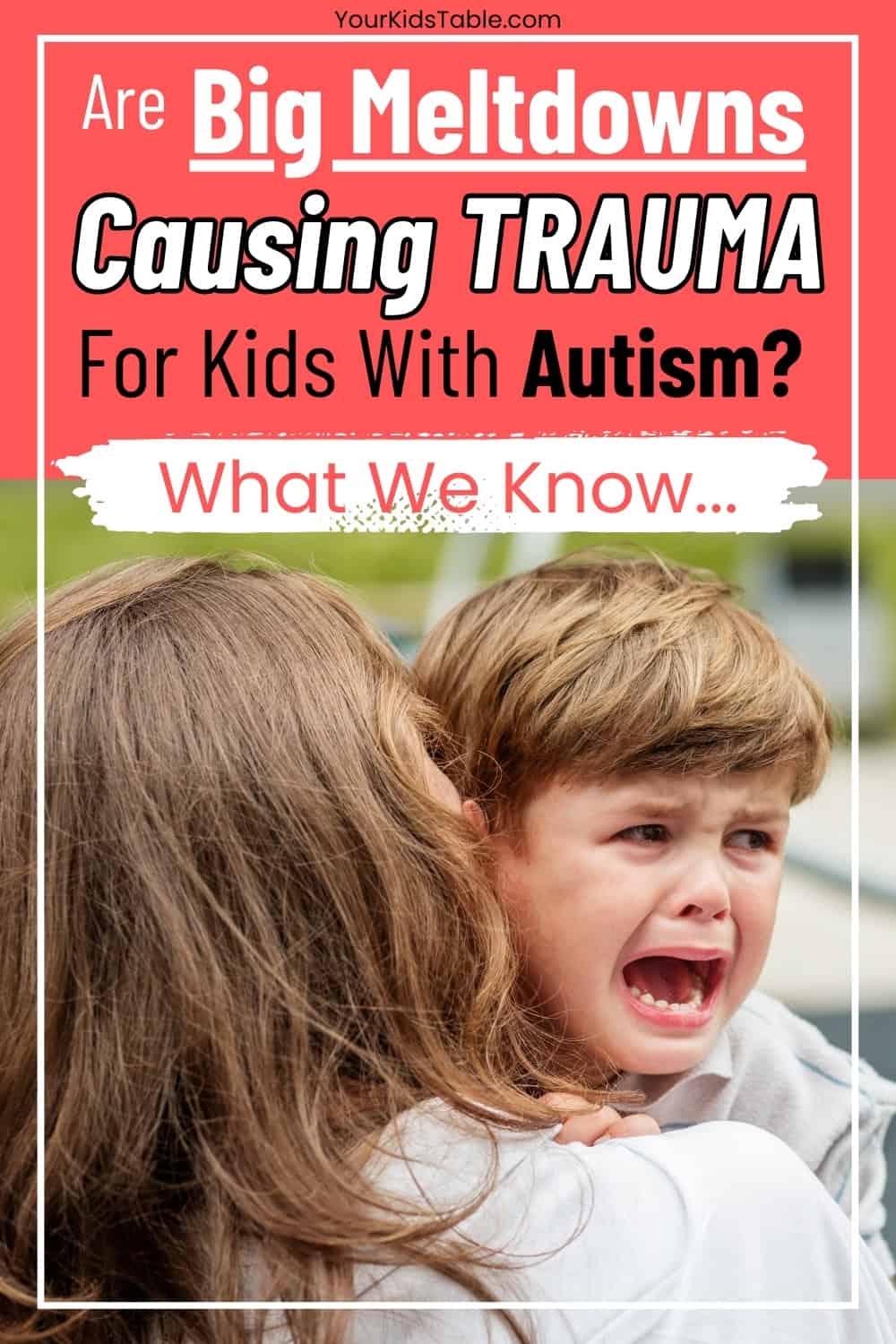
But in twenty twenty-five, so just last year, uh, there was a, um, paper put out on the autism meltdown cycle, basically, uh, theorizing what, uh, I just walked through, that basically the intense experiences of a meltdown and internally and what also happens externally, meaning that, uh, when a child has a meltdown, if there are also, you know, all of these other things happening, like they are being shouted at, um, they are being restrained, uh, whatever is happening, that this is now kind of im- is further impacting their experience with what just happened as intense, as challenging, as something that is going to maybe put their nervous system on alert And so, uh, uh, in Psychological Review, uh, there is a paper that discusses this phenomenon and that this may be more about what is going on, um, in helping us to understand and then to ultimately, gosh, to ultimately help support kids and their families that, uh, feel very overwhelmed by the meltdown cycle that seems to not stop.
Now, I just wanna explain this a little bit more deeply, and I’m gonna link up this paper in the show notes. Uh, what happens when we have a panic attack, we get insanely dysregulated. Like, we are so past our threshold, and I’m saying we, but obviously, you know, we as adults can have this experience. A child with autism is so much more likely to have this experience because of their high sensory needs that are going to dysregulate them, uh, because of potential neurotransmitter imbalances in their brain, because of, um, difficulties with communication and not being able to express or communicate how they’re feeling, what their wants, their needs, or their desires are, um, social skill impact, um, frustration, anger, uh, emotional regulation difficulties.
All of these things, all of these things can be the underlying factors and often are so, like, a combination of them that can cause a child with autism to get so dysregulated that they go into meltdown mode. Now, to be clear, meltdown mode is fight or flight. We’ve talked about this in earlier episodes on the po- on the podcast, and so I just, I just wanna revisit this here for a moment, um, and I’ll link to that episode as well below.
But- When we have a meltdown, what that means is we’re in fight or flight. Once we have gone to fight or flight, that means that a pathway has been created straight to our amygdala, which is our fight or flight center. Okay? Once that happens, depending on how intense of an experience that is to the individual, and based on past experiences with…
if there have been past experiences with going to fight or flight, that pathway can get lit up in a really, in a really strong way. And when I say lit up means activated, right? It’s, like, turned on. And so the brain has now, like, activated this amygdala, and the amygdala is designed to keep us safe. It’s designed to make sure that a bear is not gonna chase us.
Uh, it’s designed to make sure that we stay alive. In our modern world, it can cause us to be on alert and worry about many, many different things. The more that that pathway straight to the amygdala gets lit up every time there’s a meltdown, every time there’s an intense experience, every time there’s high anxiety, it really can become a super highway that is activated so easily.
And so I can’t, I can’t help but wonder by taking this a step further, if the experience in itself of the meltdown, and again, all of the different aspects of it that we just talked about, how, how others respond, the intense emotional experiences that come with that meltdown, if those themselves can be traumatic So There is a review that just came out this year in twenty twenty-six titled “The Assessment and Treatment of Post-Traumatic Stress Disorder in Autistic People: A Systematic Review.”
In, in this study, uh, the study’s actually looking at in autistic individuals, is there a higher rate of PTSD? And there is. And so these come from a variety of ways. Uh, you know, it’s not necessarily the, the meltdown, uh, but it is very interesting. Now there are some, there are some aspects that are unique to individuals with this diagnosis, such as being bullied, um, can cause trauma, m- multiple other aspects.
But the study also points us towards the fact that the intense experience of having a meltdown can be traumatic in and of itself. And so if a child develops trauma from intense meltdowns or an intense meltdown, they are likely to be triggered in a PTSD way by similar things, similar environments that are then going to push them back into the meltdown.
This correlates back to my personal experience because I have found myself evaluating, thinking through, wondering like, “Whoa, this thing that happened to me, it c- it feels pretty traumatic.” Like the event itself, these, these two nights, it felt like trauma. And so if I’m feeling that, and I’m processing and wading through it How is that, uh, meltdown experience that may be intense being perceived, uh, for a child, especially a child with autism?
Is it possible that sometimes that this can become, uh, a PTSD-type thing in a part of the cycle? And so yes, friends, this episode is not giving us a clear answer on if that’s true. The emerging evidence does seem to be pointing us in this direction, and my hope is that, you know, if you’re working with kids, if you have a kid that is having tr- like, just huge meltdowns, that we start to consider is, is this a cycle because that amygdala has been activated and is it possible that there’s a level of trauma here that may be also affecting this child’s ability to get out of the cycle?
Because then the next questions that we are then able to ask, because now we have an understanding that these may be components, is are there, are there other treatments that we can use to help heal their nervous system? I believe that they are. We’re gonna be diving into those treatments in our Beyond Behavior, so that we’re not just looking at this as behavior, and how to help kids with autism thrive workshop that’s coming up this week on August 19th.
I hope that you’re gonna join me there. It’s gonna be full of practical tools, whether you’re a parent or a therapist. You’re gonna have beautiful slides and three really helpful handouts with key dysregulation signs, with the, the evidence in what is beneficial and is so doable for everyday life, whether you’re a teacher, whether you’re working on this at home with your child.
It is not rocket science, but there is intention behind it. And so I hope you join me there. You can get your seat at yourkidstable.com/autism. I hope this conversation was helpful for you today. I would love to hear from you, so please drop a comment, leave a review, and I’ll be talking to you again soon.
Bye for now.
MORE RESOURCES FOR YOU
Grab your free printable copy of our 5 Big Calming Techniques for Big Emotions + Dysregulation– https://yourkidstable.com/emotions-printable/
Ready for a simple plan to overcome the attention, sleep, sensory, and big emotion challenges? I’ll show you how for uniquely wired kids 1-18 years old in just 2-5 minutes a day. Join me in The Connection Hive– https://YourKidsTable.com/TCH
LET’S CONNECT:
Instagram: https://Instagram.com/Yourkidstable
Facebook: https://Facebook.com/Yourkidstable
Pinterest: https://Pinterest.com/Yourkidstable
If you enjoyed this episode, we’d be so grateful if you left us a review! It’s a huge help in encouraging us and letting us know what parents with uniquely wired kids need the most.
Save This on Pinterest
Alisha Grogan is a licensed occupational therapist and founder of Your Kid’s Table. She has over 20 years experience with expertise in sensory processing and feeding development in babies, toddlers, and children. Alisha also has 3 boys of her own at home. Learn more about her here.