
What if the most powerful tool for reducing meltdowns isn’t a strategy, a script, or a consequence — but something you already carry with you?
In this episode, Alisha breaks down the often-misunderstood role of co-regulation and why it works in every setting, at every age, and at every intensity level. She explains why common “in-the-moment” techniques fail when a child is dysregulated, and what actually has the power to shift the nervous system instead.
Through real-life examples, including a powerful story from a parent who put this into action, you’ll hear why regulation is contagious, why your own state matters more than you think, and how these moments quietly shape your child’s brain over time.
If you’ve ever wondered why doing “all the right things” still doesn’t work in the heat of the moment, this episode will change how you see regulation—and yourself—entirely.
Join the new Therapist All-Access Membership: YourKidsTable.com/TAAM


Key Timestamps
0:39 – The “Secret Key” Parents Hold
3:38 – Regulation Is Contagious
7:07 – Why Logic Fails in Meltdowns
9:12 – The One Thing Kids Can Respond To
14:25 – A Real-Life Meltdown Turns Around
24:27 – The Brain Connection Being Built
32:31 – You Are Connected and Capable
Read the Transcript
Welcome to this episode of the Connected and Capable podcast. You are here with Alisha Grogan, occupational therapist mom, who is living this in real life, day in and day out alongside of you. Also having a couple of decades of working with kids, particularly neurodivergent kids, kids with sensory sensitivities, uh, picky eating, ADHD, all of those things.
And I just, I’m so grateful to you being here. I. I’m so excited every week, and I think I say that, but gosh, this, this topic is so important to me. What we’re gonna talk about today with the secret key, each parent and I would say adult. So if you’re working with a kid, your grandparent, you’re an auntie, uh, you’re an uncle, listen, uh, this is the secret key truly, that each parent, adult holds when they are.
With a kid to help them regulate. So when you’re noticing that a kid is getting dysregulated, when their behaviors are getting really big, when they’re about to have a meltdown, it’s a little bit trickier than it seems on the surface, and we’re gonna talk about why that is. Although it’s incredibly powerful when you leverage it and there is not a single situation.
When it doesn’t apply, it doesn’t matter where you are. You’re at home, you’re at school. You’re in a store, you’re in the car. It does not matter where you are. It does not matter the intensity of the dysregulation, the intensity of the behavior. This is so critical to helping minimize the dysregulation and can actually turn.
Your kids, uh, dysregulation into a regulating space. So if you are here, uh, for the first time, I just wanna give you a special welcome and just say, thanks for stick. Thanks for stopping in. Uh, if you’re someone that’s referred a friend or a colleague, thanks so much for, for passing this along. I truly am so glad to have you here.
So we’re gonna talk about what this secret key. Is three problems, uh, that we have to be aware of to be able to leverage it. Well, and you can leverage this really well when you’re aware of these factors. And I wanna share a really, just, oh my gosh, this story just hits everything we’re talking about, uh, right on the head.
Uh, a story from one of our connection Hive members that used this and. The really incredible but real life result. So let’s talk about it. What is this secret key? The key is co-regulation. Co-regulation is often described as sharing our calm. Okay. But it’s, it’s really much more nuanced than that. I do love that phrase, but that’s actually what we’re gonna talk about.
What if we’re not calm? And the fact is we often aren’t, we often are not, uh, when our kid or kid we’re working with is very dysregulated because regulation is contagious. Okay? So we really, when we are with other people. The energy that they are putting off, the emotions that they are putting off has a tendency to affect others around them.
So if somebody is getting very elevated, they’re getting very upset, it starts to what? Put everybody else on edge, on guard starts activating their alert system. Like, hello, something is not going well here. Be on alert. Same if somebody has like a really calming or a really joyful presence, can you think of a person like that that you might know when you’re around them?
Doesn’t it almost feel contagious? It feels good to be around them. Your system regulates, right? So this idea of regulation being contagious is something we see play out in real life. Now, the challenge obviously is. If we have a kid that is frequently dysregulated, which means that their nervous system is out of balance.
Okay, so just a quick recap that some signs of dysregulation are poor attention, hyperactivity, extreme excitement. Uh, anger, like anger that’s not able to be controlled, really impulsive kind of decisions. Uh, aggression. Aggression is almost always dysregulation. Uh, meltdowns. Explosive or really big emotions that feel totally out of control.
Now, I do wanna be clear here, kids struggle with impulsivity because self-control is an executive functioning skill. So it doesn’t mean that if you see your kid being impulsive, that they’re always dysregulated, that that may be their executive functioning skill in action. We also can experience anger without being totally dysregulated.
But our regulation is always kind of in this flux. It’s always rising and lowering throughout the day, and at any given time, you know, if the anger gets really big, if we get really scared, if we get overly excited. Uh, it can push us into this kind of dysregulated state once, once we are kind of in this dysregulation zone.
And that’s even a zone because we can, we can be a little bit dysregulated, we can be a lot dysregulated, and we absolutely, you know, that applies to our kids, the kids in our life too. So when, when a kid is in this kind of zone of dysregulation. And depending on how much dysregulation they’re experiencing is kind of their capacity for being able to manage anything else in their environment.
So that means can they attend to something because their brain is really stuck right now on this big emotion, and it’s giving all of the attention there. So they’re probably not able to follow directions or to learn right now. Any dysregulation, sensory dysregulation, maybe there’s a lot of overstimulation or a lack of stimulation and a child is trying to get it.
When the brain is in this dysregulated state, again, depending on if it’s like a little dysregulated, a lot dysregulated. And you know, if we get high enough, we go into a full fight or flight, the thinking and rational part of the brain is turning off and going offline, so we can’t reason. At this point, uh, depending on how dysregulated our kid is, it’s difficult to give them directions to follow you.
You have likely seen this in real life. In fact, if they’re very dysregulated or they’re in that full meltdown fight or flight mode, anything that you ask your child to do or even speaking to them because their brain has to process what you’re saying, it’s asking the brain to do another thing. And it has no more capacity because right now the brain is in full protection mode.
It’s where all of its resources are going. And so when we’re talking to the brain or we’re trying to say like, oh, hey, I saw this, I saw this regulation activity on Instagram. Like, we should try that right now. It looks so helpful. It very well may be, but if it’s something that’s brand new or something that, uh, is causing your child’s brain to have to process something to think through it.
Then they are going to freak out even though it may be very beneficial at another time or when they’re in a lower level of dysregulation. So we can’t expect our kids to kind of respond. To the kinds of input or, and that could be verbal input, like the things that we’re saying, or like maybe a sensory strategy or really any type of strategy or technique that we’re trying to use, because the brain very well may not be capable of taking it in.
And so this question comes up for me a lot. You know, we will get a DM on Instagram in our email. And somebody will say, my kid has a ton of meltdowns. Like, what am I supposed to do? That is, that is such a layered question because of this com, this complete dynamic. So there are a ton of specific strategies.
That you can use when your kid is on the verge of a meltdown or maybe even in a meltdown. But it varies so much from child to child because it’s what is their brain really responding to, except this one key that co-regulation. Now the co-regulation is challenging for us because number one, there’s three reasons here.
Okay. We are human, so we are experiencing this dysregulation from our child and it’s contagious. And so it’s, it is hard just from a human standpoint to not respond or to not be affected by their dysregulation unless we’re being intentional about it. Unless we’re being aware of, oh wait. ’cause we can turn our thinking brain on if we’re not too dysregulated to say, oh, they’re dysregulated, they’re not being bad.
This does not mean I’m a bad parent. I don’t need to fix this right now, or teach them a lesson. I need to help them regulate. And the best way that I can do that is by making an intentional choice to be calm myself. Okay. Now that’s, if we’re at the first kind of challenge area, we may be able to do that, but we have some other layers of challenges potentially.
It may also be a challenge for you if you are triggered by something that your child is doing. So this is, this is a layer beyond just kind of our human dysregulation. For instance, if your child has just lied to you and that feels particularly triggering to you, like you are really angry, like you just start to feel so outta control right away.
Maybe honesty is a very high value of yours. Maybe you had somebody in your life that lied to you a lot and that signals danger and it makes you really upset, and so you are like, I do not wanna see that in my child. I need to get this under control right now. And your thinking brain starts to go woo way offline because you are being triggered by what your kid is doing.
And this really applies to pretty much any behavior we see. I’m gonna, we walk through this really poignant real life example here in a couple of minutes, you’re gonna, you’re gonna see what this parent’s trigger was probably one that you all can relate to. So we have to also kind of manage, are we being triggered by something?
That our kid is doing, or are we already in a baseline state of dysregulation because of parenting? Because our kid is neurodivergent and has a lot of needs that we are dealing with all the time because. Another layer. You know, our culture is pretty dysregulating. We have a lot of stimulation coming at us all the time.
Kind of quiet stillness things that, that used to exist for, for all of time up, up until like the last, you know, 70 years does not really exist for us anymore. We are just constantly stimulated and we are expected to sleep more and do more. With the constant stimulation and distractions that we have in our life.
And so if we have a, a baseline dysregulation from just this culture that we are swimming in from our kids’, constant needs and behaviors, oh, it’s really hard to share calm when we don’t have it to start with. And the third layer is that some of our kids that are neurodivergent have parents like us that are also neurodivergent.
We may have a lot of sensory sensitivities ourselves, so we may have trouble with executive functioning skills. You may be an adult that has a history of trauma, and so your system is on a hair trigger response too, to go into fight or flight, and you are trying to hold it together. And so just saying, share my calm.
Oh my gosh, that’s that, that’s a tall order, and you’re not alone in that.
So, so what is, what is the solution? So we’re gonna get to that. I wanna give you a re some really clear steps that you can take, if any of that’s resonating with you, or even if you think, wow, I, I think I might, I might be able to get there. Uh, you know, just recognizing my own human response. I wanna show you what this looks like in real life with.
A situation that I think could happen to any of us and one that you may have been in those details might look a little bit different. And I’m gonna change some of the details, uh, and leave a little bit of it. Uh, some of the details vague just to respect this family’s privacy, but. This is a parent from our membership, the Connection Hive.
And we talk a lot about regulation, give a lot of regulation strategies, uh, for both parents and kids. And so, uh, this parent had actually just talked to me on our support call and we had talked through some really specific things and that was coincidental because she obviously didn’t know that this event was supposed to happen, but her son was having a lot of meltdowns.
And so we were kind of tweaking a game plan for them. And so it was really incredible to kind of have her post this in our, in our community, uh, a few days later and her really putting it into action and kind of with within those, those family dynamics. So her kiddo was in a store, had a $5 gift card. To, to purchase something.
So they’re in the toy section. They’re, they’re looking for something. Well, what do you think happens? $5? Doesn’t, doesn’t get us too far these days. Everything he wanted was way more than $5. He had gone into the store feeling so excited. You know, I get to pick out a toy, I get to go grab something that I really want.
And you know, in his child mind, he was not able to really understand that some of the things he wanted were likely going to be more than $5. He had this gift card, and so as he starts to pick out toy after toy after toy. And the parents say, oh, you don’t have enough money for that. You know they’re being calm.
You don’t have enough money for that. Let’s take a look over here. Here’s some $5 toys. He begins to get very upset. He’s getting frustrated, he’s feeling super disappointed. His emotions are getting really high. He’s getting dysregulated. He’s starting to yell in the store and make a scene. One of the parents.
Gets triggered by this, okay? It’s making the scene, and this is a very common trigger because it looks like for, as the parent, we may be worried about what does this look like? Do I look like a terrible parent right now that I don’t have control of my kid? Or we may be triggered because again, of our own upbringing, I was never allowed to act this way.
I would’ve been smacked or I would’ve gotten in so much trouble and now here’s my kid. You know these the flipping out. I need to get control of this situation. These thoughts go through our head in milliseconds, our brain reacts so quickly, and so this parent matches. Child and starts trying to control the child starts yelling at the child.
This pushes the child further into dysregulation. Now I wanna, I wanna pause here in our story and please hear me. I have been this parent. You have likely been this parent. Okay? Like. There is no shame in what is happening here, and when I’m finished with the story. I think that there are some really important things that we can learn from it, and that’s really the key.
None of us are perfect. None of us come as parents without some baggage, without some things that we are working through without, without being a human being that makes mistakes. Okay, so there is no judgment on what is happening here. But it is important for us to objectively stand back and see, oh yeah, okay.
So my yelling and trying to control this situation and, and that was what I tried. That was the strategy I used. Oh yeah, I was, I was pretty triggered by that. Okay, so now this kiddo is super dysregulated. He goes into fight or flight. How do I know he went into fight or flight? Because he ran away. Now he is in a busy store.
He is not thinking clearly. His survival brain is turned on and he is running away and he is hiding scary. It’s like our fear as parents, right? So the other parent is witnessing all of this. The parent that had, you know, had been on the coaching call with with me, and so. This parent is thinking through everything.
Her heart is beating. She is scared. Fear also pushes us into fight or flight. But she’s thinking of these strategies. She’s thinking of this support call, and she makes an intentional choice. I have to calm myself. And so she does two things. She doesn’t run. She walks very quickly and she is super aware of her tone of voice.
Side note, ’cause I have done this many times. If you are trying to share your calm and you’re doing it through gRED teeth and you’re faking it. Your tone will give you away. Kids process, the tone of voice. We actually all do. And if you think about this, if you think about sometimes when you’ve taken something the wrong way from a coworker, from a spouse, from a partner, it’s the tone usually that you’re responding to when something is taken the wrong way or you’re picking up on something.
That that is, is revealing itself in that tone of voice because our brain processes the tone before it processes the words, and so our kids are hearing our tone of voice. So she changed her tone because this is how, these are two things she’s doing to deliberately share her calm.
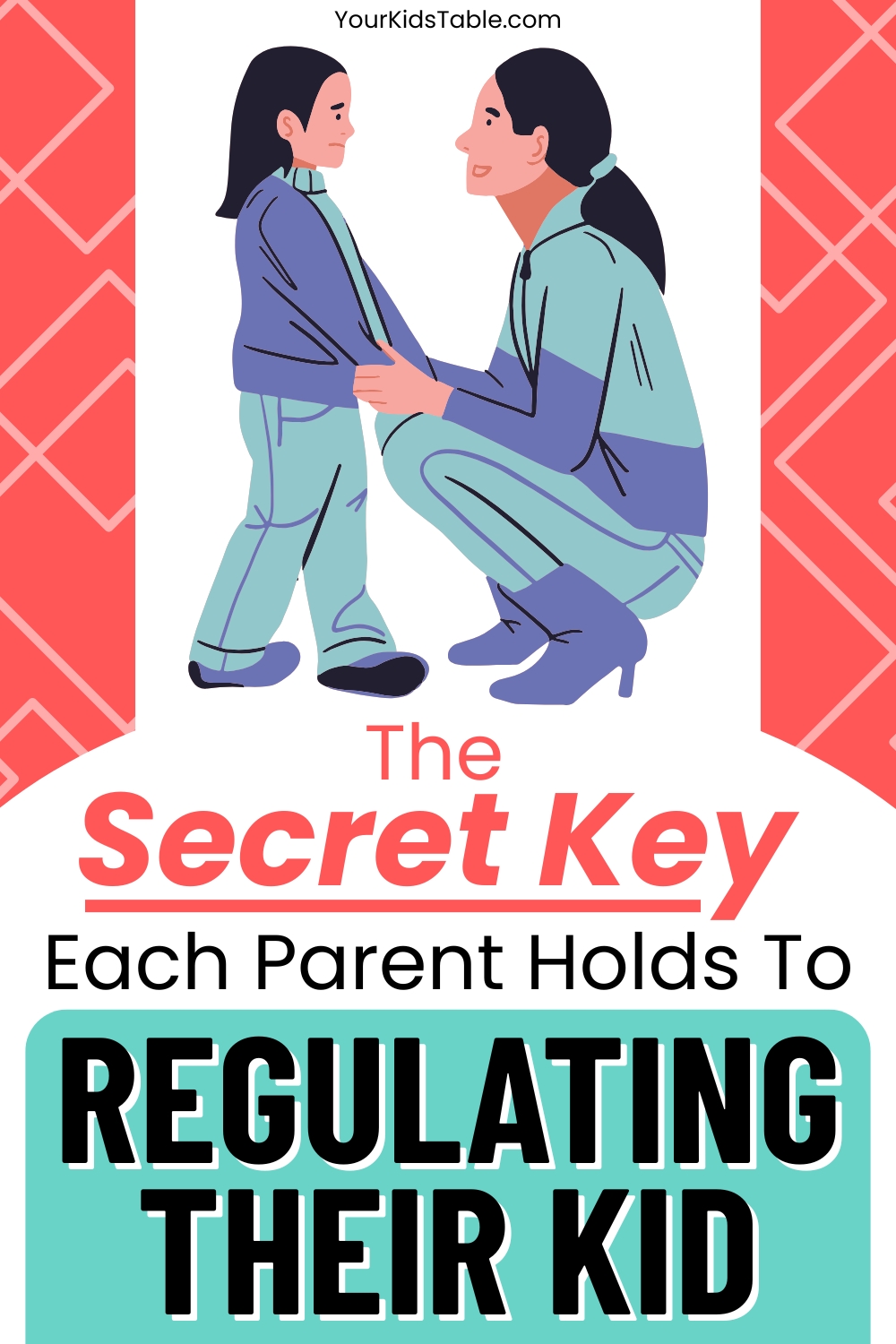
So she. Sees him darting around, hiding. She changes her tone. He finally locks eyes on her. She does something else really powerful. She drops to her knees so that she is on eye level with him. This automatically makes her less threatening. It automatically shows him. I. This person is safe right now.
They’re not towering over me. They’re not screaming, they’re not waving their arms. The look on her face matters. She’s trying to soften her face, her gaze. She is trying with everything to just admit like, I am calm, I am safe, and he begins to walk towards her. She doesn’t say a word. Remember how we had talked about.
That dysregulation, he would not have been able to process it. It is not in that moment to start saying, you scared me. Why did you do that? Which are things that we’ve said again, guilty. She says nothing. When he gets to her, she immediately starts using some regulation strategies that she know works for him.
Okay, so one of those is she starts doing compressions on his shoulder. Again, we had talked about this. We have these, we have these like micro activities on the hive. So she had been using these with him Sometimes that that could be detrimental to a kid, you know, if they’re already dysregulated. She knew this was gonna be calming for him, so she’s now giving him calming input.
She’s not speaking, and he’s able to start regulating. She can see him visibly calming down.
After that moment, the other parent meets up with her and says, what? Like, what did you just like, what, how did, what did you do? Like that was unbelievable. Like, what, what did you do? And so in that moment, uh, this, both parents are learning what is really helping, what is really helping to. Diffuse or what could have been a very dangerous situation that could have went 20 different ways if she had not intentionally focused on sharing her calm.
She had to create the calm. She wasn’t naturally like, oh, I’m just, I’m so calm. My kid’s running around in this giant store and I’m not being upset by this at all. She had to make a choice. Now, sometimes. Sometimes that is beyond our capacity, and we’re gonna talk about that in a minute. But the other thing that I think is so important here, two other things, really important happened in this moment.
Not only was he calmed down, regulated, the situation is diffused huge. That’s like goal number one, right? Okay. The second thing. Is that it taught her child something. In that moment, he formed a new connection in his brain. It’s a brand new connection. It’s a, it’s probably a weak connection. Maybe. Maybe some interactions like this had already happened, so maybe it’s not brand new, so maybe it’s strengthening this new pathway that’s being built in the brain that.
Hey, she is safe. She is not gonna flip out when I’m losing it. When I’m losing it. I can trust her and I can go to her and I don’t have to run away in the store, or I don’t have to get aggressive or feel out of control. She. Is going to help me and is my safe space. Now the ultimate goal is that kids are self-regulating, but for kids to build that self-regulation skill, it, it starts with co-regulation.
It’s the first step. So that’s incredible. Every time that sequence happens again, not only does his dysregulation come down in the moment, which is decreasing these behaviors, these things that are so hard, but he is. He is also learning this is, this is safe, and he will build his own regulation skills off of that also.
Thirdly, the icing on the cake is that it builds connection between this parent and child. They feel more connected, their relationship is deeper, and that that is pretty incredible. So what can we do here? Because I don’t wanna minimize the fact that while this is so powerful, that it can be really hard because of those three reasons that we talked about.
Because we’re human, because we get triggered and we might be having our own dysregulation. And third, because we may have our own neurodivergent sensory needs executive functioning skill challenges. So wherever you’re falling, you could have a combination of those things. We all have the human one we’re all dealing with just like, Hey, we’re human.
And that dysregulation is contagious. And by the way, obviously that’s working two ways. That’s why our regulation affects them. But we have to intentionally choose it. And again, that can be really hard when we have those other layers. So if you’re feeling. If you’re feeling at all discouraged or like, gosh, I don’t know if I have the capacity for that.
It’s okay. It’s okay. What I wanna encourage you to do, and this is such a powerful step, because many of us, especially if you have neurodivergence, if you have any history of trauma, it is probably difficult to even notice. That you are dysregulated yourself. And so I’m gonna challenge you to just start noticing that dysregulation, we all kind of have symptoms for that.
Does your heart start to race or your palms sweating and there’s usually kind of a, a host of them? For me, there is a level of, you know, I do feel like a level of out of control. I know that when I get really dysregulated, I will often yell, I will snap and it feels like something I can’t control because my thinking brain has gone offline.
So I have, I have done some really intentional work in the last few years of how to start rewiring my own system so that I am not pushed into that state of fight or flight so quickly, and we can be in a blended state of fight or flight. As adults, we often learn how to kind of control it. While all of those crazy emotions are going inside these physical sensations and our thinking brain is offline
and it’s my hope if, if this is helpful for you, oh my gosh, I would love to hear it. I would love to share more about adult regulation. We actually. Uh, we’re gonna be teaching an in-depth workshop later this year on adult regulation, parent therapist, whichever you are, and working with kids, because if you are a therapist and you are working with kiddos all day long and you have a stacked caseload and you are dealing with lots of different behaviors that are coming through, you also can be very dysregulated.
It can be very challenging. To share your calm in those situations. And I also wanna just say to my therapist, listening, I know there’s a lot of you fellow OTs and speech therapists and physical therapists, if you are working in a setting where you have contact with parents, like early intervention or even pri, like private practice or you’re in a school.
And you are working with a teacher, I’m gonna challenge you to think about how we can support parents and teachers that are having long periods of time with kids that are in a dysregulated state. Earlier in my career, and actually for a lot of it, uh, you know, there’s obviously a general sense of that happening and I worked for many, many years in early intervention in a zero to three.
And so I would show up at people’s homes, which is a pretty unique situation and I was, you know, always aware of parents and what they were dealing with. But my focus, obviously as it should be, was on the child and kind of their goals and helping them get regulated. But I don’t think that I was intentional enough about thinking about where is this parent and how can I support them better in understanding their regulation?
Because when I do that, it is going to directly influence the child. And so I know that there are challenges there within our, our limits of practice, but. I just wanna encourage you as therapists to think about giving that kind of holistic care, uh, to support the parents and the teachers, uh, that may have multiple kids and that may feel super dysregulated themselves.
And so when we’re asking them to do a strategy, the capacity might not be there. And so we, we have to work at helping them get regulated too. Ooh. Okay guys. So co-regulation, so listen. If you wanna learn more, if you wanna keep going, we have, uh, some freebies in the show notes. Definitely check those out.
We have a great, uh, printable if you haven’t grabbed that yet. If you are wanting to go more, you wanna learn more regulation strategies, build those executive functioning skills, address the reflexes that might be retained, that are causing this just so much dysregulation. Then definitely check out the connection hive.
If you are a parent, I would love to have you inside. I would love to to be hearing your questions and helping and supporting you. The link for that is in the show notes as well. And if you are a therapist, we have a brand new therapist membership. This has been a long time coming. When we started the, the connection hive a couple of years ago, it was my dream then.
To have something for therapist, with therapist support and with all of our CEUs. And so the doors are officially open to that. And I would love to, to see you inside if you are a therapist also in the show notes. It has been so, so good to be here with you guys. Uh, I’m so grateful for your time and just you showing up, you learning, you sharing with your friends.
Uh. I believe in your capacity. I believe that you are capable. It’s just one small step at a time here with you in it. I’ll see you next time.
MORE RESOURCES FOR YOU
Grab your free printable copy of our 5 Big Calming Techniques for Big Emotions + Dysregulation– https://yourkidstable.com/emotions-printable/
Ready for a simple plan to overcome the attention, sleep, sensory, and big emotion challenges? I’ll show you how for uniquely wired kids 1-18 years old in just 2-5 minutes a day. Join me in The Connection Hive– https://YourKidsTable.com/TCH
LET’S CONNECT:
Instagram: https://Instagram.com/Yourkidstable
Facebook: https://Facebook.com/Yourkidstable
Pinterest: https://Pinterest.com/Yourkidstable
If you enjoyed this episode, we’d be so grateful if you left us a review! It’s a huge help in encouraging us and letting us know what parents with uniquely wired kids need the most.
Save This on Pinterest
Alisha Grogan is a licensed occupational therapist and founder of Your Kid’s Table. She has over 20 years experience with expertise in sensory processing and feeding development in babies, toddlers, and children. Alisha also has 3 boys of her own at home. Learn more about her here.