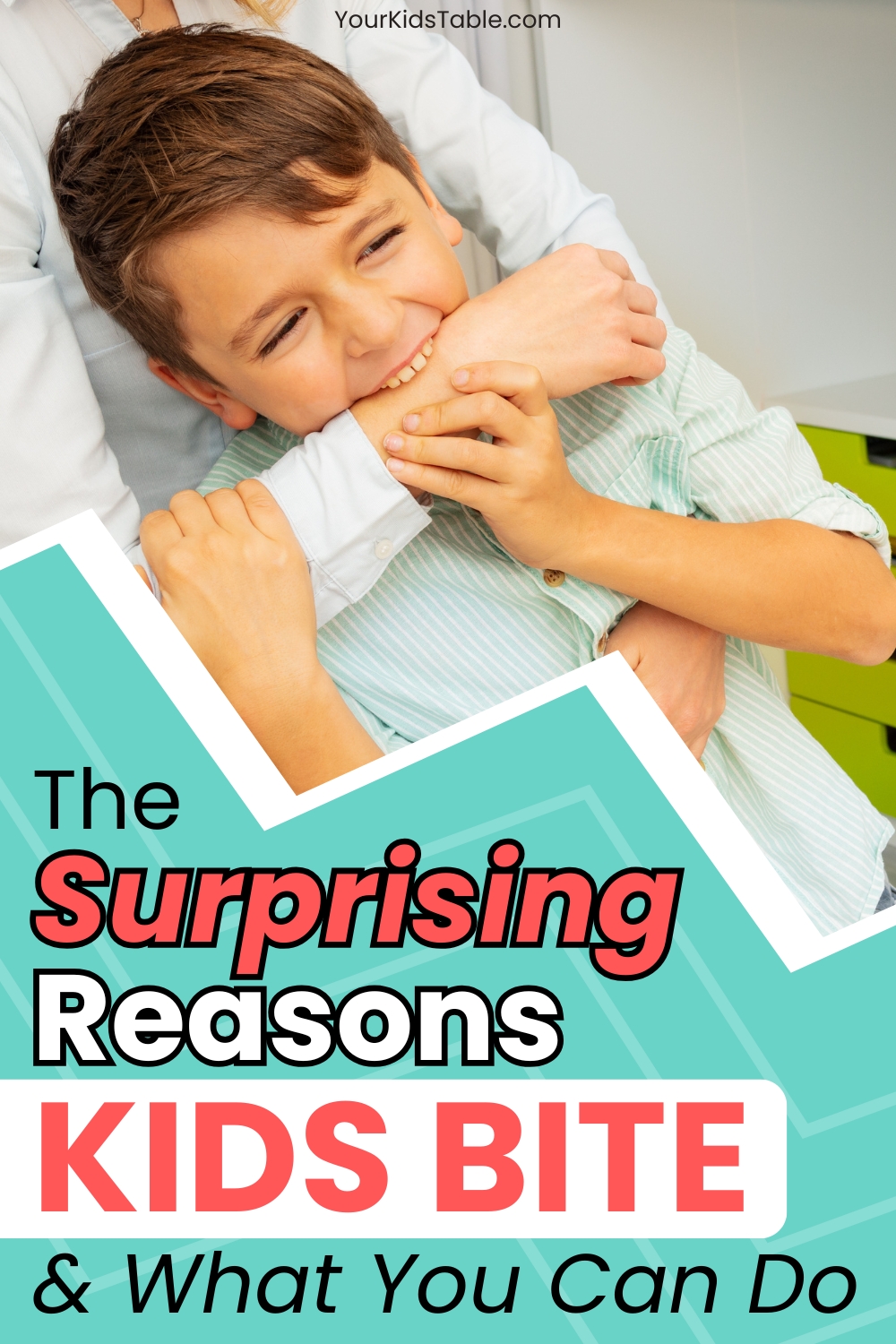
Biting can feel shocking, frustrating, and honestly… a little scary especially if it seems to come out of nowhere.
Whether your child is biting others, biting themselves, or it’s happening in those intense, dysregulated moments, it’s important to know what’s actually what’s going on.
In this episode, I’m breaking down what’s really behind biting, and why it’s often not about hurting someone at all. We’re going to look at the 4 underlying drivers that are easy to miss, especially when it feels random or happens so fast you don’t see it coming.
I’ll also walk you through3 foundational strategies you can start using right away to help decrease biting and support your child in a safer, more effective way.
And if you’ve ever felt unsure how to respond in the moment, or like nothing you’ve tried is working consistently this episode is for you!
Want to go deeper on helping your kid with aggression? A new deep dive workshop is happening this week:
How to Decrease Aggressive Behaviors, sign up here: https://yourkidstable.com/aggressive-behaviors/


Key Timestamps
03:09 What causes biting
11:30 Sensory and calming reasons
16:38 Dysregulation and survival mode
18:40 Helping your child instead
22:11 Crunching and safe mouth options
25:00 When to seek extra support
26:54 Encouragement and next steps
Read the Transcript
Welcome back to the Connected and Capable podcast. You are here with Alisha Grogan, and today we are talking about biting. Lots of kids bite from a really early age. We see this in toddlers, and for uniquely wired kids, it’s not too uncommon to see this even up into the teen years sometimes.
It really can be concerning when we see our kid biting themself. Sometimes that is happening, when they’re biting somebody else, particularly if it’s, if it’s us as the parent, uh, sometimes even as an OT, I, I have been bitten, as an OT, and it is… It is jarring to say the least, right? It, it is uncomfortable, it is painful, and biting in particular can seem to come out of nowhere. And so as therapists and parents, it can kind of leave us on edge when we’re around, our kid or a kid that we know kind of bites randomly sometimes or when they get really upset. Sometimes that’s a little bit easier to just kinda tell when it’s coming, but still can sort of set us on edge.
So in this episode, we are going to be talking about what’s really behind biting. There are actually four different factors that I think most biting falls under, and they’re not all what you would think. And then we’re gonna talk about three ways that you can help your kid Kind of move away from this biting, whether it’s a regular occurrence, whether it’s on themselves or you, there are absolutely steps that you can take. So welcome. I hope you’re sipping a great cup of coffee or on a walk or getting some dishes done as you are listening here.
Before we dive in further, I did wanna say that this episode is sponsored by our upcoming How to Decrease Aggressive Behaviors workshop. While biting is sometimes an aggressive behavior, not always, as you’re gonna hear today, this workshop is a deep dive of 90 minutes into current research and what I personally use, what I guide parents to use and have seen great success with in helping to decrease the aggressive behaviors.
This workshop will teach you both a set of tools to use right in the moment when aggression is increasing, and also how to build long-term emotional regulation so that your child isn’t triggered into aggression as easily. It’s going down May 20th. Of course, there’ll be a replay when you register. Make sure that you check the show notes to get inside or head to yourkidstable.com. I would love to see you there.
Okay. So let’s talk about what is behind biting. So number one, I think when we’re talking about biting, we do need to start to think about, do you see that your child is upset or that they are dysregulated in that moment? And here’s the tricky thing. It might, it might not always be super obvious, and the reason I’m asking that question is because sometimes it feels like there’s a randomness to biting.
I think particularly when it feels like there’s a randomness to biting, there are three different reasons that that could be playing a role for. Okay? So, the first of those, of course, and I think this is the thing that we think of most of the time, although I think it is a small percentage of kids that are actually doing this, and that’s to get a reaction. We see this typically in our younger kids, toddlers. It’s like they kind of learn the power of, “Oh my gosh, if I bite down, there’s this huge reaction.” They don’t even fully understanding that they’re hurting somebody or what they’re doing. It’s just, “Whoa, my sister screams when I chomp down on her arm,” or mom or dad or whatever.
Okay? There’s just this, this cause and effect that is a natural part of toddlerhood. Past this age, I don’t really see it. Now, of course, if a child has developmental disabilities, and even if they’re eight, but where their kind of development is, they’re still in a place where they’re looking at cause and effect, you may see this in older kids as well. When a child bites just for a reaction standpoint, they kind of look surprised.
They might laugh or giggle a little bit when somebody gets upset, or again, just have this look of surprise on their face as they’re kind of watching and just learning that they have the power to create something, basically this strong reaction in people. So that’s the first thing, and I’m not gonna spend too much time on it because again, I think this is a small window in development and not all kids, even… This isn’t something that every toddler does, but we do see some toddlers do this.
The second reason that we see kids sometimes bite is communication. So for kids in particular that do not have verbal language or it’s limited, particularly as they start to get dysregulated. So in, in a speech therapy session, a child may be able to say so many words or communicate something, but in a home environment or a different therapy environment where they’re being challenged or they’re getting very dysregulated, that language is gonna decrease to the point that they don’t really… They don’t, they don’t have it.
And so what we need to consider here is that biting is something that has become learned. They may have started it as a reaction or for the next reason that we’re gonna talk about, and they noticed, they learned very quickly that if they bite, woo, that gets people to stop. That gets people to stop what they’re doing, okay? I’m gonna give you an example of this, of how this, how this happened.
A couple of years ago, during our sensory summer camp, we had a little girl who did not have any verbal language, and she wanted to be held a lot and often. She also really struggled to kind of stay with the group, and so there was a lot of redirection to go get her. And so one time, one of our young OT students, she was actually just going into OT school, so didn’t, did not have a lot of experience working with kids with, specific needs, although was just amazing student.
She’d actually been in our summer camp every year. And She was helping redirect this girl probably for the fifth or sixth time during that day. She thought that she wanted picked up, and she picked her up and to kind of snuggle her, give her some input, and she bit down right on her chest. And so in that moment, it was very obvious that she did not want picked up. She wanted placed down, and she had no other way to communicate that.
Now, in hindsight, and, and, you know, what we talked about with the OT student is, A, watching for body language cues more closely, not relying on that as a way to kinda help get a kid back all the time, especially when we know that while they, they, they do have a sense of what they wanna do, even though they’re not saying that verbally, that we maybe need to show pictures to communicate. You know, “Do you, do you want held right now, yes or no?” Or a picture of holding or not holding, or waiting and seeing if she is going to make some gesture to do that. Also, really watching body language signs for she is done.
She wants me to let go of her. She doesn’t want me to hold her right now. She wants to be, she wants to be placed, over here. Really starting to look for those body cues more. But here’s the thing, the biting just reinforced the communication loop there, because what happened when she got bit? She immediately put her down because she now has to deal with this pain and this pretty big bite mark, that is, that is on her chest. And so she is put down, and so for this child, she is learning, “This is super effective. Gosh, I, I have no other way to communicate to them that this is… I don’t want this to happen or that I want this thing to stop, but if I bite…” They’re not thinking, I am sure this little girl is not thinking, “I’m gonna hurt this person, and that will show them,” or, “I’m gonna hurt this person so they don’t do this anymore.” It is simply a means of communication sometimes.
Now, also, I happen to know that this, this little girl had a lot of sensory needs. She was a sensory seeker. She wanted to, swing. She wanted to be in the pool. She wanted to have lots of input on her body. And so I would say that while that was primarily communication driven, and this is often the case, that we sometimes see kids that they o- that have these big sensory needs often because they, they get a dose of regulation when they bite The reason for that is that the jaw is a powerhouse of proprioception receptors.
Okay, so proprioception is one of our hidden senses. It helps us know where our body is, is in space, and the receptors, while we can’t see them, like we can see our eyes for vision or our nose for smell, the receptors for proprioception are located all throughout our joints and muscles, and there are a whole bunch in our jaw. And so when kids bite, which is why they may bite themselves, when kids bite, they are getting, although, you know, there’s pain if they’re biting themselves, there’s also this huge dose of proprioceptive input that is almost always regulating.
It’s why you see some kids want to chew on ice. It’s why you see some kids want to chew on their shirts or the end of a pencil, or they have everything in their mouth all the time and they’re chewing on it. It’s because they’re getting all of this proprioceptive input. Well, unfortunately, some kids make the connection that if I bite, then I’m also g- you know, I’m getting this proprioception, I’m communicating my needs. This is like a win-win type situation here. So sometimes these two things are stacked together, but they’re not always. Sometimes it’s purely communication, and in that moment with that little girl, while she was a sensory seeker, it might have just been to fill a communication need.
At the same time, at the same time, it’s very possible that she is looking to also get this dose of sensory input by biting, and that’s happening on a subconscious level. And you can th- you can imagine that if she’s getting very frustrated, and she’s unable to express that in any way, that there is a release in this act of biting for her. Can we… You, if you’re listening to this, you, you may be thinking of your own child.
I know we have many therapists that listen here, like myself, and you’re thinking of these kids right now. And so it can be kind of hard to tease out, well, is this just communication? Is it sensory? It’s often an overlap, but sometimes I do see kids do this from a purely sensory standpoint. I’ll give you another example. I saw once a little boy who was a huge sensory seeker.
So he was on a swing in a therapy room that had all this great equipment in it. He was swinging really wild, was having a great time, but he was kind of getting dysregulated because the swinging was so wild, even though he was the one that was controlling it and was asking for more from the person swinging him, there was this hyperness and excitement that was increasing for him All of a sudden, after minutes of this swinging that he seemed to be enjoying, he hopped off the swing and darted off the mat and sunk his teeth into a giant foam cushion really hard.
So great that he is not biting anybody else, but in that moment, his system was actually getting so dysregulated that he stopped instantly, and the way that he chose to regulate himself was biting. Now, this is really helpful information for us because in this instance, when I see this boy doing this, I think of so many kids that are biting other people, biting themselves, or again, biting numerous things in their environment, and it’s very clear that there is this release.
Now again, the, the release comes from the fact that you’re getting calming proprioceptive input when your brain feels like it’s starting to go out of control, which is what the dysregulation feels like. So the biting acts as grounding. Now, please understand also that some kids are walking around, they’re chewing on their shirts all day. Now, there are other elements going on here.
There is a taste portion, you know, of their senses that is happening when the ch- kid is consistently chewing on something. There’s tactile, the, the sensations, like especially like on a cloth or something like that. But the main driver often is this proprioceptive piece, and some kids are doing this consistently throughout the day when they’re biting on other things because it’s a regulation strategy and it can become a habit.
So what starts out sometimes as a real sensory need, over time grows into a habitual activity that a child is just doing. There’s still an added level of regulation when a child is participating in that activity, but I really wanna focus today on these kind of biting events, you know, where we see a kid just sink their teeth into somebody else, themselves, or again, in this instance, where a kid is hopping off the screen, running across the room, and the way that he is choosing to regulate himself, even while he was on a swing, was,
“I just need to bite into something right now.” He actually started to calm down and his regulation started to lower after he did that. But here’s the thing, biting can seem kind of odd, right? Like we’re putting our mouths on things, so there is this concern about if a kid is biting random things or people, of germs, of like what is going in their mouth. It can feel embarrassing.
We also, and I think most of the concern comes from our child or the child that we’re working with hurting somebody else or hurting ourselves. It hurts to get bit, you know, especially if a kid is sinking their teeth in really hard, and so- It’s im- it is obviously important to help kids learn how to help stop biting and getting their needs met in a different way.
Now, before I get there, I did promise you four, reasons that kids bite, and so far we’ve talked about wanting a reaction, remember small piece, an act of communication, there’s a sensory need going on there that they need to bite, and then the last one, which we’ve already talked about a little bit in this, is when kids are totally dysregulated or their dysregulation is building. And so we see this, we definitely see this with a sensory component. Again, there’s like some overlap here.
That kid’s dysregulation was building, but this was this huge sensory driver for him. Other times, kids are just being pushed into fight or flight, and if they are in fight, they are going to bite to try to defend themselves because they are in survival mode. So they’re not thinking, they are not doing it intentionally. It is a, it is a release for them because it gives them something to do with the overwhelming emotions that they might be experiencing in that moment when their whole body’s in fight or flight. That is not a pleasant experience.
You know, your heart is racing, your mind, the executive functioning skills have completely shut off, and so your mind is solely focused on just surviving. All of these neurotransmitters are being released and chemicals are being released in the body to just hype up, hype up that kiddo that’s being pushed into fight or flight, and the biting is part of the fight. And yes, sometimes we also see kicking and hitting and throwing and thrashing around.
All of that is absolutely part of fight or flight too, when we see a kid moving into full meltdown mode. But when we see the biting happening then as a, as a result of this meltdown, well, it gives us a different course of action. And in fact, when we consider all of these underlying cause, it really helps give a guide for how do we help this kid who is probably pretty uncomfortable at times because of their dysregulation, because of their sensory needs, because they’re unable to communicate, and this is the way in which they’re doing that.
So let’s talk about three different strategies that you can start using. Now, these, these are kind of foundational. This is where I get started whenever I see kids are consistently biting, and consistently is the, the key word there. Uh, you never wanna see your kid bite again because it hurts them or other people. But there are times that kids are just experimenting with that, that it, that it’s very rare for a child to bite.
But when we are seeing biting be a regular part of the challenges that a kid is facing every day, we really wanna think about giving them other ways to get proprioceptive input. Okay? So remember, that, that is a huge payoff of what they’re getting. So before we even see that they are aggravated or that they are upset, if we are able to help them by just giving them proprioceptive activities, then they are m- more likely to be regulated. They are going to have their sensory needs met, so they’re not going to be looking for it in other ways.
So let’s talk about some… a couple of examples of proprioceptive activities. Proprioceptive activities are anything that activates these receptors in our joints or muscles. So for when we’re talking about whole body, because the proprioceptive sense is in charge of the whole body, even though the biting comes from the mouth, and it’s, again, kids are going there with their mouth because this is just a powerhouse of it.
But there are other activities like jumping, jumping on a trampoline, jumping on a bed, jumping on a couch, doing jumping jacks, doing scissor jacks, any of those types of activities, just jumping up and down on the ground, all give proprioceptive input. And so it might mean building that into your kid’s day. Maybe before they go to school, maybe they frequently bite somebody at school. Maybe before they go to school, it’s, “Hey, let’s do, let’s do 50 jumps on the trampoline,” or, “Let’s do 25 jumping jacks before we go.”
And maybe at school they have some of those movement breaks also built in, that they get a break where they can go jump or do some jumping jacks to help get that proprioceptive input in. Now, again, there are other proprioceptive activities besides jumping. Hanging, pushing, pulling, all give proprioceptive input.
So a kid carrying a heavy stack of books, uh, an appropriate amount for their age, a kid pushing a wheelbarrow, a kid pushing a laundry basket full of clothes or items, all give that strong proprioceptive input. And so we can also even just look for daily activities that help put this into kids’ lives. Like can they help unload the dishwasher?
That’s gonna give some proprioceptive input. Can they help carry in the groceries? Can they help move the mulch that we’re putting in in the yard today? Even, you know, again, if that’s a small amount, if that’s their own bucket, all of that gives input to the proprioceptive system. And when we put that into their day at regular intervals with just a little bit of intention, it can actually decrease the biting.
Now, the second thing is we can also target proprioception in the mouth. Some kids, it really is like, “I just want that. I want that biting. I want that crunching right in my mouth.” And for those kids, we do wanna think about giving them crunchy foods when they’re eating anyways. Is there always a crunchy food there? Can they have carrot sticks? Can they have raw apple? Can they have, roasted chickpeas or nuts or chewy things, you know, like, dried fruits, like dried mango, like raisins, that are gonna just give them a lot of proprioception when they’re eating anyways.
Are they old enough where they can chew gum? Are they able to chew ice? Can they have a water bottle with a chewy spout on the top? Okay, like a Camelback type one, so they can kinda put their mouth in there and just chew away on that. Those are the things that we wanna think about putting in when this biting feels like it’s coming out of nowhere.
And then our last strategy is giving them safe things to put in their mouth. That impulse to bite when a kid gets dysregulated or they’re struggling with communication, if they start to learn this is the safe thing to bite instead of dad’s arm, that helps to replace this, this painful interaction, right? While the child’s needs are still getting met. So that might mean, depending on the age of the child, that maybe there are some, like toddler pre- and even for preschoolers, chew toys around, you know, like teething rings, those types of things, “Hey, let’s bite on this.” There’s also lots of plastic toys and fidgets that are mouth-safe that just look like regular toys that kids can bite on, like plastic animals, and of course, there are chewy necklaces.
So there are a myriad of chewy necklaces that you can buy with all different types of shapes and designs. Some even look just super kind of cool and sophisticated, something a teen could wear. There are playful and whimsical ones. I mean, really the sky is the limit with these necklaces. And so your kid can wear them if it’s an ongoing challenge, or you could have that handy when you see them starting to get dysregulated. It’s like, “Hey, do you wanna bite on this?” As a way to help them. Knowing that that might be something that is really challenging for them.
Now, if this is a larger issue of aggression and, you know, there’s… Biting is just one of a myriad of things going on, or the biting is just so intense and difficult to control, maybe you feel like you’ve tried some of these strategies already, then I encourage you to join us in the Aggression Workshop. I mentioned that at the, at the top of this episode. This has been a long time coming because we get so many questions about kids with aggression in the Connection Hive, which is our, our parent app where we put all of our, our regulation tools and strategies. But I wanted a comprehensive, clear guide where we really can cover, cover it all. So it’s a two-hour workshop. It does include time for Q&A. You will get the recording. I really hope that you get inside and join us. It’s, it’s happening soon, like this week.
So definitely check the show notes or head to yourkidstable.com to get a seat inside. If you’re looking for some free resources to get started, we have those below in the show notes, too, with some beginning regulation strategies. And as always, if you know somebody that is struggling with this, I would love for you to share it with them so that they are able to start getting the help and the support that they need.
The reason I do this and have been here since 2012 is because there are so many parents and therapists that are seeing these challenges and aren’t quite sure what to do. What does this mean? How do I help my child? And so I just– I wanna just encourage you if you are here, because again, it says so much about the type of parent that you are as you seek answers and seek to just support your child or the kids that you work with in the best way possible.
So if you’re about to conquer biting, take a deep breath, know that you are capable, and it’s just one small step at a time. It’s been so good to be with you today. I’ll see you here next time.
MORE RESOURCES FOR YOU
Grab your free printable copy of our 5 Big Calming Techniques for Big Emotions + Dysregulation– https://yourkidstable.com/emotions-printable/
Ready for a simple plan to overcome the attention, sleep, sensory, and big emotion challenges? I’ll show you how for uniquely wired kids 1-18 years old in just 2-5 minutes a day. Join me in The Connection Hive– https://YourKidsTable.com/TCH
LET’S CONNECT:
Instagram: https://Instagram.com/Yourkidstable
Facebook: https://Facebook.com/Yourkidstable
Pinterest: https://Pinterest.com/Yourkidstable
If you enjoyed this episode, we’d be so grateful if you left us a review! It’s a huge help in encouraging us and letting us know what parents with uniquely wired kids need the most.
Save This on Pinterest
Alisha Grogan is a licensed occupational therapist and founder of Your Kid’s Table. She has over 20 years experience with expertise in sensory processing and feeding development in babies, toddlers, and children. Alisha also has 3 boys of her own at home. Learn more about her here.